Photography Lighting Reflectors: A Comprehensive Guide
Photography is an art that captures moments, emotions, and stories. But behind every great photograph lies the magic of lighting. In the realm of photography, lighting plays a pivotal role in determining the mood, tone, and overall quality of the image. One of the most essential tools in manipulating and enhancing this lighting is the Photography Lighting Reflector.
What are Photography Lighting Reflectors?
Photography Lighting Reflectors are tools used to bounce and redirect light towards a subject or scene. They don’t create light on their own; instead, they harness existing light, whether it’s from the sun or an artificial source, and redirect it. This redirection can help eliminate unwanted shadows, highlight specific areas, or even out the lighting on a subject.
Why are Reflectors Essential?
Eliminate Shadows: When shooting outdoors during the day, odd shadows can appear on the subject’s face or body. A reflector can help fix these shadows, ensuring that the subject is evenly lit.
Enhance Natural Light: On overcast days or during the golden hour, the natural light can be soft and diffused. Using a reflector can amplify this light, making the subject stand out against the background.
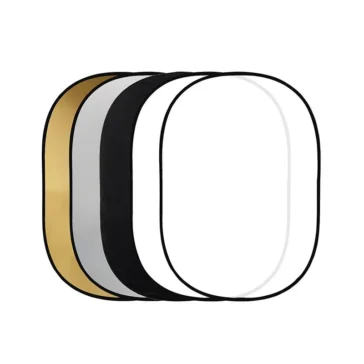
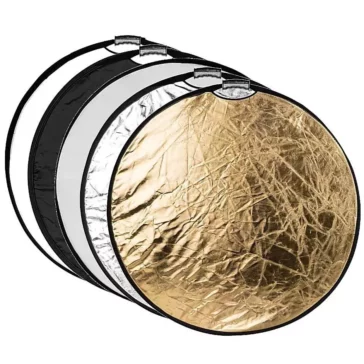
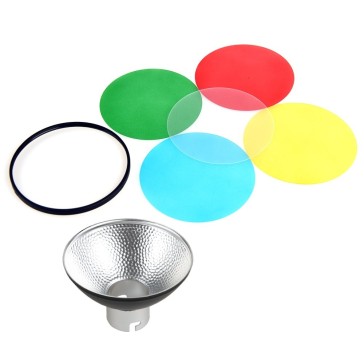
Versatility: Reflectors come in various sizes, shapes, and colors. Each color imparts a different mood and effect. For instance, a gold reflector can add warmth to a portrait, while a silver one can increase contrast.
Cost-Effective: Compared to other lighting equipment, reflectors are relatively inexpensive. Yet, they can dramatically improve the quality of photographs.
Types of Reflectors:
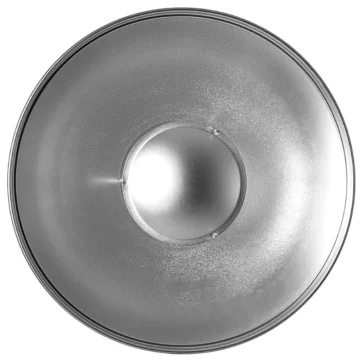
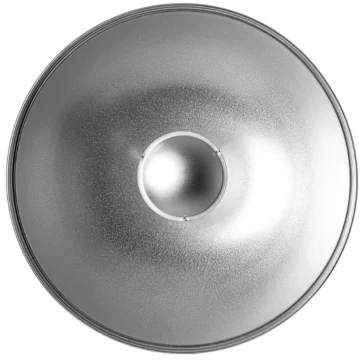
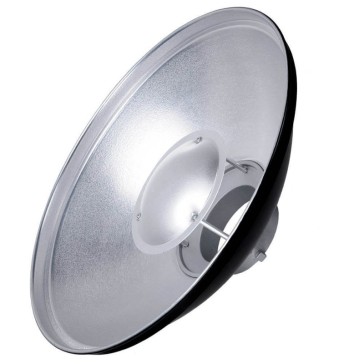
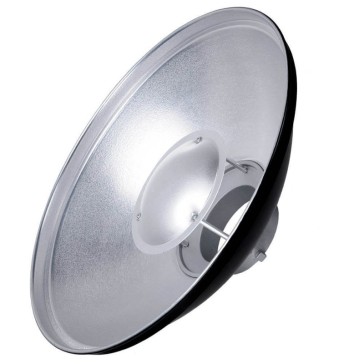
Silver Reflectors: Increase contrast and produce a cool light.
Gold Reflectors: Provide a warm glow, ideal for sunset portraits.
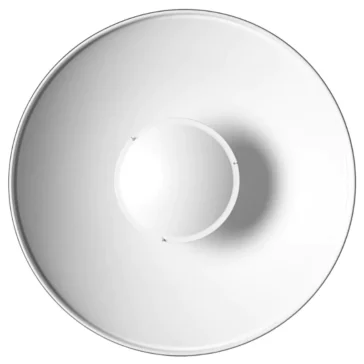
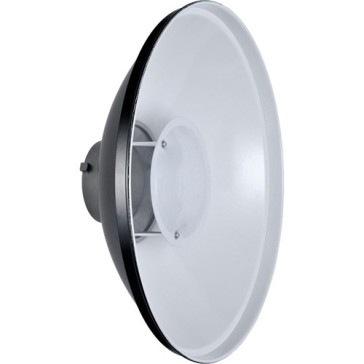
White Reflectors: Produce soft, neutral bounce light.
Black Reflectors: Absorb light, creating shadows and adding depth.
Using Reflectors Effectively:
Positioning: The angle and distance at which the reflector is placed can drastically change the lighting effect. It’s essential to experiment and adjust the reflector’s position to achieve the desired outcome.
Size Matters: Larger reflectors can distribute light more evenly over a broader area, while smaller ones can focus light on specific parts.
Double Up: Using two reflectors simultaneously, one to bounce the light and another to fill in shadows, can produce professional-level results.
In conclusion, Photography Lighting Reflectors are indispensable tools for both amateur and professional photographers. They offer a simple yet effective way to manipulate light, ensuring that every shot is picture-perfect.



 Help
Help +91 9987296817